

If you manage a fleet of box trucks, pickups, or tractors, you have probably heard truck graphics, truck wraps, and vehicle lettering used as if they mean the same thing. They don’t. The difference comes down to how much of the vehicle is covered and what the vinyl needs to do. Vehicle lettering is cut vinyl text, such as your company name, phone number, and USDOT number. Truck graphics add logos, color bands, or printed images to part of the truck. A truck wrap covers most or all of the painted surfaces with printed film.
For warehouse, distribution, and manufacturing companies along the Colorado Front Range, this choice affects more than appearance. It shapes your cost per unit, how quickly you can brand a new truck when it arrives, how your fleet looks at a customer’s dock, and how well the finish holds up to Colorado sun and winter roads. Here is how each option works and how to pick the right one.
What Are the Key Differences Between Truck Graphics, Truck Wraps, and Vehicle Lettering?
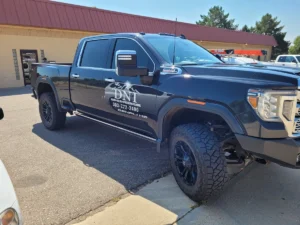
The short answer: lettering identifies, truck graphics brand, and wraps advertise. All three use vinyl, but the materials, design work, and installation time are different.
Vehicle Lettering
Vehicle lettering is text cut from solid-color vinyl and applied directly to the door, box, or tailgate. It is the simplest and least expensive option, and it is the standard way to display required information such as a legal business name, USDOT number, and unit numbers. Lettering is quick to produce and replace, which makes it practical for large fleets that rotate vehicles often.
Truck Graphics
Truck graphics cover part of the vehicle with a logo, a color band, a printed image, or a mix of cut and printed vinyl. A common example is a branded panel on each side of a box truck showing the logo, services, and website, while the rest of the truck keeps its factory paint. Truck graphics are sometimes called partial wraps, and they deliver strong brand recognition at a moderate cost.
Truck Wraps
A truck wrap is large-format printed vinyl film that covers most or all of the vehicle’s painted surfaces, often including the cab. Wraps allow full-color designs, photography, and even a complete color change without repainting. Because the film sits over the paint, a professionally installed and removed wrap can also help protect the original finish, which matters when you plan to resell or return a vehicle.
Put side by side, the three options line up by coverage and cost. Vehicle lettering covers text only, handles identification and compliance, and costs the least, but design options are limited to text and simple shapes. Truck graphics cover part of the vehicle, such as side panels, logos, or color bands, and focus on brand recognition at a moderate cost. Truck wraps cover most or all painted surfaces, offer full-color, edge-to-edge designs and the most visibility, and carry the highest cost.
Trailers and box bodies fall into the same three categories. A 26-foot box truck or a dry van trailer has large flat sides, so even partial truck graphics read clearly from the highway. Flat surfaces are also easier to install on than the curves of a cab, which can affect both price and timeline.
How Do You Choose the Right Truck Graphics, Wraps, or Vehicle Lettering for Your Business?
Choose based on what each vehicle needs to accomplish, how many units you run, and how long you keep them. Most commercial fleets end up with a mix rather than one option for every vehicle.
- Vehicle purpose. If a truck mainly needs to be identified at gates and customer docks, lettering or simple graphics may be enough. If it runs visible routes along I-25 or through Boulder, Longmont, and Fort Collins, larger truck graphics or a wrap can do more marketing work.
- Fleet size and turnover. A fleet that adds or replaces trucks every year benefits from a standardized graphics package that can be reproduced quickly and consistently on each new unit.
- Owned or leased vehicles. Lease agreements often set rules about what can be applied and how the vehicle must be returned. Removable vinyl is common, but confirm the terms before you order.
- Budget per unit. Multiply the per-vehicle cost across the whole fleet. A simpler design applied to every truck often presents better than a few wrapped trucks parked next to unbranded ones.
- Brand standards. Corporate brands with strict color and logo guidelines need color-matched printed vinyl and approved proofs before production begins.
Here is how that plays out. A distribution company running 20 box trucks might choose branded side panels with the logo and website on every box, plus cab lettering for the USDOT and unit numbers. A manufacturer with a few sales and service pickups might wrap those vehicles fully, because they park at customer sites and serve as a first impression. A company with a large leased fleet might standardize on cab-door logos and lettering that come off cleanly at lease return.
What Information Is Required on Commercial Trucks?
Many commercial trucks must display specific identification, so plan for it in the design. Under federal FMCSA marking rules, commercial motor vehicles covered by the regulation generally must show the carrier’s legal or trade name and USDOT number on both sides, in a color that contrasts with the background and is readable from 50 feet in daylight. Whether the rule applies depends on factors such as vehicle weight and the type of operation, so confirm your obligations with the FMCSA or your compliance advisor. A sign professional can then build the required markings into the layout so they meet size and contrast needs without cluttering your brand.
How Does Colorado Weather Affect Truck Graphics and Wraps?
Front Range fleets deal with strong UV exposure at elevation, wide temperature swings, hail, and winter roads treated with magnesium chloride and other deicers. That makes material choice and care important. Cast vinyl with a protective overlaminate generally conforms better to curves and resists fading and shrinking longer than lower-grade film, especially on large printed areas. Horizontal surfaces such as hoods and roofs usually wear first. Regular hand or touchless washing, keeping pressure washers away from vinyl edges, and rinsing off deicer residue in winter all help your truck graphics last longer.
Ready to Brand Your Fleet?
Vehicle lettering, truck graphics, and truck wraps each have a role in a commercial fleet. Lettering handles identification and compliance at the lowest cost. Truck graphics balance brand impact with budget. Wraps deliver the most visibility and design freedom. The right mix depends on how your trucks are used, how many you run, and how long they stay in service.
303 Sign Company designs, produces, and installs truck graphics, wraps, and lettering for businesses across the Front Range, from Longmont and Fort Collins to Thornton and Westminster. Explore our truck, trailer, and van wraps, then contact us to request a quote or schedule a fleet consultation.
Frequently Asked Questions
How much do truck graphics cost compared to a full wrap?
Pricing depends on vehicle size, coverage, design complexity, and materials, so an exact figure requires a quote. In general, vehicle lettering costs the least, partial truck graphics fall in the middle, and full truck wraps cost the most because they use more printed film and take longer to install. Fleet orders are often quoted per unit.
Can truck graphics be removed without damaging the paint?
In most cases, yes, when quality vinyl is applied over factory paint in good condition and removed by a professional. Removal is easiest while the film is within its rated lifespan. Aftermarket paint, existing damage, or old vinyl that has baked on in the sun can make removal harder, so discuss it before installation.
How long does it take to install graphics on a fleet of trucks?
A single truck with lettering or partial graphics can often be finished quickly, while a full wrap on a box truck takes longer because of surface prep and panel work. For larger fleets, installers usually schedule vehicles in rotation so trucks stay in service. Your provider should give you a timeline after reviewing the vehicles.
Should our trailers match our truck branding?
Matching trailers with your tractors or box trucks creates a consistent fleet image at docks and on the highway. If trailers are leased, shared, or swapped between carriers, many companies use removable graphics or brand only the power units. Base the decision on who controls the trailer and how long it stays in your fleet.