
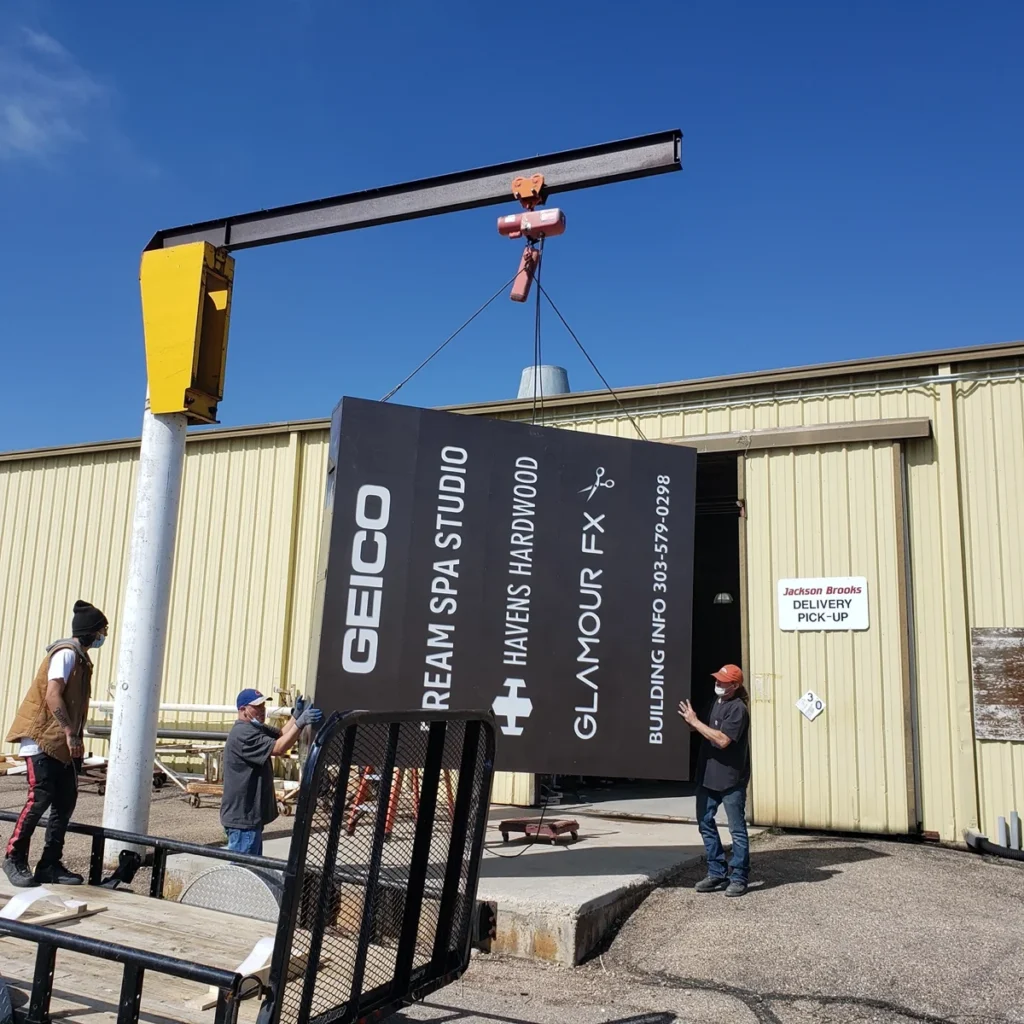
A full-service sign company should manage the entire life of your signage: site surveys and consultation, design, permitting, fabrication, installation, and ongoing maintenance, repair, and updates. For corporate clients, the value is simple. One accountable partner carries the project from the first site walk to the final inspection, and stays available after the signs go up.
That matters for established companies along the Colorado Front Range. A warehouse in Longmont, a distribution center in Thornton, and a corporate office in Boulder may each need building signs, lobby signs, ADA signs, and wayfinding, and each city has its own sign rules. When design, permits, and installation are split across several vendors, schedules slip and details fall through the gaps. Here is what to expect from a full-service sign company and how to evaluate one.
What Design, Fabrication, and Installation Services Should a Full-Service Sign Company Provide?
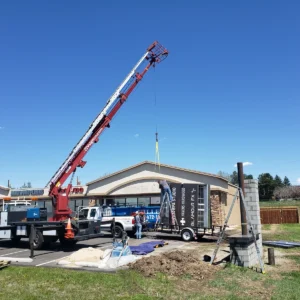
At minimum, a full-service sign company should handle five stages in-house or under its direct management: consultation, design, permitting, fabrication, and installation.
Consultation and Site Survey
A good project starts on site. The sign team should measure walls and frontage, check sightlines from roads and entrances, note electrical access, and photograph existing conditions. For industrial facilities, that includes truck entrances, dock areas, and visitor parking, because signs have to work for drivers as well as guests.
Design and Brand Compliance
Design should translate your brand standards into signs that can actually be built and permitted. Expect scaled drawings, photo renderings showing the sign on your building, material and color specifications, and a formal proof approval before production. Corporate clients with strict brand guidelines should ask how the provider matches logo colors across different materials, such as painted metal, acrylic, and printed vinyl.
Permitting
Most permanent exterior signs need a permit, and illuminated signs usually need an electrical permit as well. Sign codes differ between Front Range communities, and business parks or landlords often add their own approval requirements. A full-service provider should prepare the drawings and applications, respond to reviewer comments, and tell you early if a design will not meet local limits. 303 Sign Company handles permitting in-house as part of its process.
Fabrication
Fabrication covers the physical production of channel letters, dimensional letters, monument and cabinet signs, lobby signs, ADA signs, and vehicle graphics. Ask which items are built in-house and which are sourced from partners, and how quality is checked before delivery. Electrical signs should be built to recognized safety standards and carry the appropriate listing label, which inspectors commonly look for.
Installation
Installation requires the right equipment, trained crews, and coordination with your facility. That can mean lift or crane work, electrical connections, and scheduling around shift changes or dock activity. The installer should protect your building surfaces, follow site safety rules, and leave the area clean.
How Can a Full-Service Sign Company Support Corporate Signage Beyond Installation?
The relationship should continue after installation. Signs age, facilities change, and brands evolve, so a full-service sign company should support maintenance, repairs, updates, and long-term planning.
- Maintenance and repair. Replacing failed LED modules or power supplies, repairing hail or wind damage, cleaning faces, and replacing faded panels keeps your signage looking professional.
- Process and layout changes. Warehouses and plants change often. New dock doors, racking layouts, safety zones, and traffic patterns all require updated wayfinding and safety signs.
- Rebrands. A provider that already knows your locations can audit every sign, reuse existing structures where possible, and phase the change so no site looks half-finished.
- Multi-location consistency. Companies with several Front Range sites benefit from one set of sign standards and one team applying them in Fort Collins, Westminster, Loveland, or Erie.
- Records. Keeping drawings, permit records, and material specs on file makes future repairs and additions faster.
What Questions Should You Ask Before Hiring a Sign Company?
Asking the right questions up front helps you compare providers on more than price.
- Which services do you handle directly, and which do you subcontract?
- Who manages permitting, and how do you handle reviewer comments or denials?
- Will I see scaled drawings and renderings before approving production?
- How do you match brand colors across different sign materials?
- Who installs the signs, and how do you schedule work around our operations?
- Do you provide repair and maintenance after installation?
- Can you support multiple locations with consistent standards?
Is a Full-Service Sign Company Right for Your Situation?
A full-service partner makes the most sense when a project involves several sign types, permits, electrical work, or multiple locations, and when your internal team does not have time to coordinate separate vendors. For a single window decal, the full process may be more than you need. For a new facility, a relocation, or a rebrand, having one team responsible for every stage usually saves time and reduces rework.
Talk to 303 Sign Company About Your Next Project
The right sign company does more than print and hang signs. It surveys your site, designs to your brand standards, secures permits, fabricates and installs to code, and supports your signage for years afterward. For corporate clients, that end-to-end approach means fewer handoffs, clearer accountability, and signage that stays consistent as your business grows.
Based in Longmont, 303 Sign Company provides design, in-house permitting, fabrication, and installation for businesses across the Front Range. Browse our sign products or schedule a consultation to start planning your project.
Frequently Asked Questions
What is the difference between a sign shop and a full-service sign company?
A sign shop often focuses on producing signs, such as printed banners or vinyl graphics, from files you provide. A full-service sign company manages the whole project, including site surveys, design, permitting, fabrication, installation, and maintenance. Corporate clients with complex or multi-site projects typically benefit from the full-service model.
Do I need a permit for a new business sign in Colorado?
Most permanent exterior signs require a permit from the city or county where the property is located, and illuminated signs usually need an electrical permit too. Rules on size, height, placement, and lighting vary by community. Check with your local planning department or ask your sign provider to confirm requirements before design is finalized.
Can one sign company handle both interior and exterior signs?
Yes. Many full-service providers handle exterior building signs, monument signs, and channel letters along with interior lobby signs, ADA signs, and wayfinding. Using one provider for both helps keep materials, colors, and brand presentation consistent throughout your facility.
How early should we contact a sign company for a new facility?
Contact a sign company as soon as you have a site and a target move-in date. Design, permitting, and fabrication all take time, and permit review schedules vary by city. Starting early reduces the chance of opening without permanent signage.